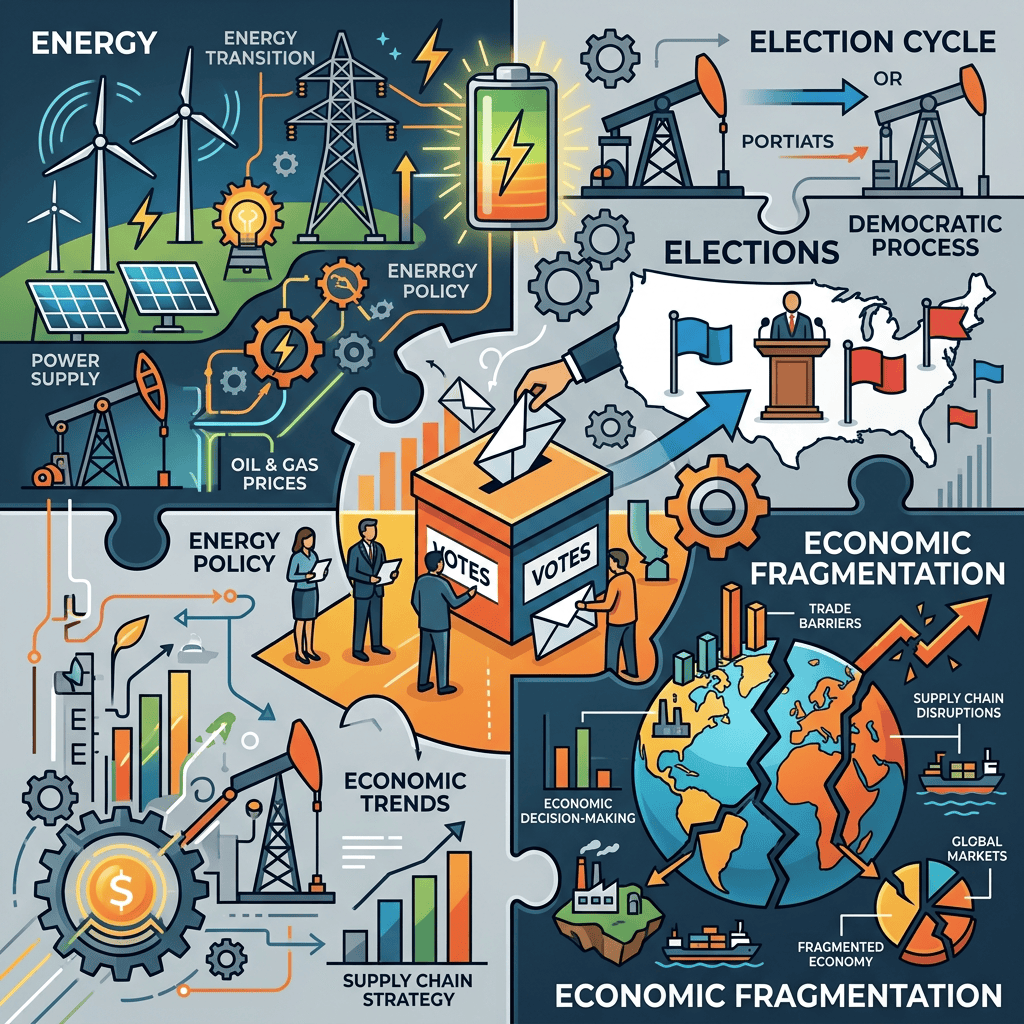
Geopolitical tensions remain a defining macroeconomic variable in 2026. Fragile ceasefire dynamics in the Middle East continue to influence oil markets, with traders pricing a geopolitical premium into crude. Meanwhile, strategic competition between the U.S. and China intensifies around technology, trade restrictions, and industrial policy.
Three Structural Shifts
- Energy Security Over Efficiency: Governments are prioritizing supply resilience over cost optimization.
- Industrial Policy Renaissance: Subsidies and strategic investment programs reshape global manufacturing flows.
- Trade Bloc Consolidation: Friend-shoring accelerates, increasing fragmentation of global supply chains.
Economic Consequences
Fragmentation reduces efficiency but increases resilience. Over time, this could structurally elevate inflation volatility and reduce potential growth rates. The global economy is not de-globalizing — it is reconfiguring into strategic blocs.


Laisser un commentaire